
How to Use Multi-Agent AI Debate for Decision Making
Learn how multi-agent AI debate systems move beyond single-agent answers to improve decision making. Understand adversarial synthesis, set up debates in minutes, and replace gut-feel decisions with rigorous analysis.

Key Highlights
-
Learn how a multi-agent AI debate moves beyond single-agent answers to improve your decision making.
-
Understand adversarial synthesis, where multiple AI agents challenge assumptions for robust results.
-
Discover how to set up your first debate in minutes using the Crucible decision intelligence platform.
-
Explore product tiers designed for executives, developers, and teams using Microsoft Teams.
-
Replace gut-feel decisions with a rigorous debate system that stress-tests your strategy.
-
See how orchestrating tasks among specialized AI agents leads to superior, fact-checked insights.
Introduction
Big choices need to have more than just one point of view. Large language models can give fast answers, but they do not have the deep thinking from many sides that you need for tough business decisions. The next step for decision making with ai is to use multi-agent ai systems that act like a group talk. These advanced ai systems set up a team of experts in the ai to look at every detail. This gives you the full story, so you move from just a quick answer to one you can really trust.
Understanding Multi-Agent AI Debate Systems
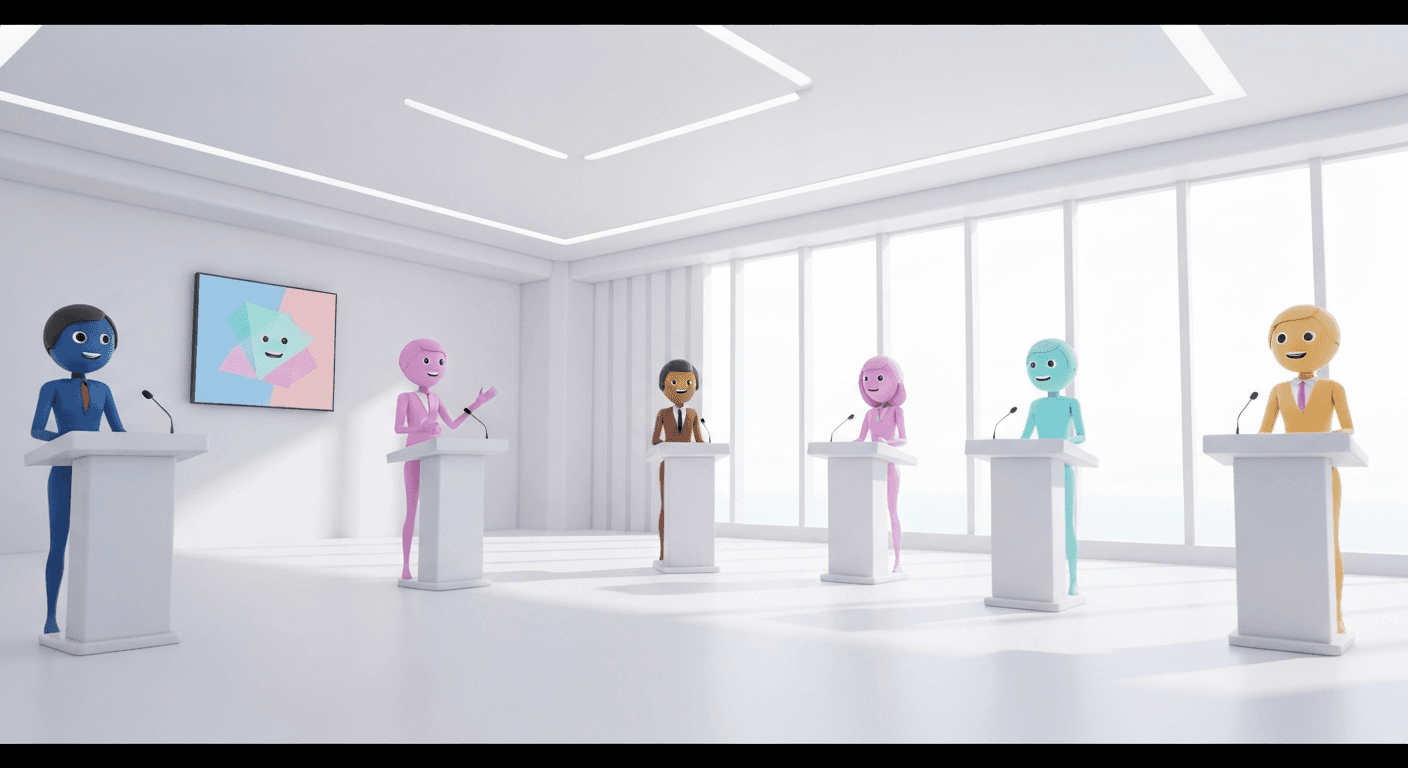
This way changes artificial intelligence from just answering questions to truly working with you in a smarter way. When you use a multi-agent AI debate system, you can test your ideas and spot hidden risks before deciding. It is good for decision making because it brings in different and sometimes opposite points of view. One model alone cannot show all these sides, but with MAS, you get a better final answer because it is looked at by different ai agents.
What Is a Multi-Agent AI Debate?
An agent debate system uses AI where many large language models, or LLMs, each act as a different person. They all look at a problem together and talk about it, step by step, over several rounds of debate. Each agent, or model, gives its own point of view. They build on, question, or fix the ideas that others bring up.
This setup helps a lot with complex tasks that need strong reasoning. You do not get just one line of thought. You get a mix of ideas from every agent. For example, one might look at money issues. Another could talk about market risk. The discussion grows more complete with these different points.
The agent debate system then puts all these thoughts together in one final report. It mixes the different views to make a strong answer. This gives you more than what one LLM or model could do alone. You end up with a smart and well-balanced decision, showing real thinking work by the AI and language models.
How Multi-Agent AI Debates Differ from Single-Agent Decisions
A single agent, such as a basic chatbot, gets a question and gives one answer. It cannot check its own work or ask for feedback from another agent. With a multi-agent AI debate, things change. This system uses a group that builds both conflict and teamwork into the way it gives answers.
There are big benefits to using multi-agent debate systems over using a single agent. Here is how they are different:
-
Diverse Perspectives: A multi-agent system is like having more than one expert. Each one shares a different view. But a single agent with most language models gives just one general answer.
-
Built-In Peer Review: In a group, the agents check each other's work. They point out mistakes and check facts. This helps cut down on mistakes or made-up facts that can happen in large language models.
-
Structured Communication: The agents debate using set rules for how they talk to each other. This makes the thinking clear and easy to follow, unlike a single agent, which can be hard to understand.
This set-up lets the system take a close look at its own answers. It does what a single AI agent cannot do alone, and the choices it makes are stronger and better checked.
Why Replace Gut Feeling with Multi-Agent AI Debate?

This kind of AI is not here to take over what people do. It is made to work with us and help us. By acting out a debate on complex tasks, the AI debate process sets up a clear review to help you see if your first thoughts are right or if you should think again. The sections below will talk about the problems with old methods. You will also find out how an AI debate process can help and be a good fix for them.
Challenges of Traditional Human Decision Making
The way people often make choices, even in smart boardrooms, can have many problems. If people rely on gut feeling or just a quick talk, they often get worse results. That is because people tend to agree with others instead of thinking deeply. This is known as groupthink, where everyone tries to agree instead of looking at the problem from all sides.
When there is no clear system to show another point of view, there is a risk that people will miss things that could go wrong. The team might make false assumptions and not even check them. Also, openness and transparency can be lost if one strong person leads the talk. Their voice can end up counting more than the well-thought-out ideas of others. This makes it hard to manage risks the right way.
Normally, people do not stop to look at the whole problem from every angle. Without rules that make the team think about the other side, they may end up choosing a plan that is not very good. They might find out about their mistake, but by then, it could be too late.
Benefits of Adversarial Synthesis and Fact-Checking
Adversarial synthesis is the main driver in a debate that uses more than one ai agent. In this setup, ai agents go against each other on purpose. This helps make the final answer stronger and more reliable. The goal is to force fact-checking and point out weak spots in reasoning by letting the agents disagree. This means the group moves past having just one easy answer where everyone agrees.
In many rounds of debate, the ai agents check each other's arguments like a peer review. For example, an agent that acts as the "Skeptic" will question the big promises or guesses from a "Visionary" agent. The Visionary then has to give data to support what it says. This back-and-forth gives us a better and tougher answer in the end.
The key benefits include:
-
Bias Reduction: By bringing different views into the debate, adversarial synthesis helps fight the problem of confirmation bias found in people and in one ai agent alone.
-
Improved Accuracy: When agents fact-check each other, they help fix mistakes and keep the ai from making things up.
-
Deeper Insights: As they argue, the debate shows many small details and hidden effects that just one style of reasoning cannot find out.
Multi-Agent AI as Risk Mitigation for High-Stakes Decisions
When you need to make big choices about money or plans, lowering risk is key. ai systems made up of many ai agents can help a lot with finding and checking risks that you might not see at first. These ai agents can act like a team of experts and help show the blind spots in what you want to do.
Letting each ai agent do its own job makes sure you look at every part of your choice. For example, the ai agent called “Risk Officer” can look for worst-case outcomes. At the same time, the “Legal Advisor” ai agent checks if the plan follows the rules. This kind of setup gives real transparency to the process of seeing risk.
In the end, these ai systems leave a full record of the whole talk and thinking. You get a clear report that lists the risks, shows other views, and explains the ai’s final reasoning for the choice. This helps you make smart choices with more trust and more control.
Inside Crucible Decision Intelligence

When you let many different ai agents talk things out, you get more info and a deeper look than if you used only one ai. This brings more transparency to your business. You can trust your big choices more. The next sections will explain how our setup works and why it's special.
Overview of the Crucible Ecosystem
The Crucible ecosystem is set up to give strong support to leaders when they make decisions. The core components work with a debate from many ai agents. It uses more than one advanced language models (llms) to give a solid look at each issue.
At the base of this system, there is a group of ai agents. Each one has its own way to see things. For example, one might act like a Chief Financial Officer. Another will be a Marketing Head or a person who does not believe things right away. When you give a decision to look at, the Crucible makes these agents talk, like a debate.
The system uses what we call an adversarial synthesis process. With this, it takes the different arguments and brings them into one report you can use. This helps make sure your analysis gets tested from every side. So, you do not just get a simple answer from one ai. You get a full report made by the group using top language models and the power of many ai agents.
Adversarial Synthesis vs. Generic Chatbot Responses
Generic chatbot responses from single large language models are designed for speed and generating a plausible answer. They lack the critical thinking and peer review necessary for high-stakes decisions. Adversarial synthesis, the method used by Crucible, is fundamentally different.
Controlled intelligent systems use multi-agent debates and adversarial synthesis for better results because they create a competitive environment where ideas must survive scrutiny. This process ensures transparency, as you can follow the lines of reasoning and see how a conclusion was reached. In contrast, a chatbot’s answer often arrives without justification.
Here is how they compare:
| Feature | Generic Chatbot | Adversarial Synthesis (Crucible) |
|---|---|---|
| Process | Single model generates one answer | Multiple agents debate and challenge ideas |
| Output | A single, often generic, perspective | A synthesized report with pros, cons, and risks |
| Reliability | Prone to bias and factual errors | Errors reduced through peer review and fact-checking |
| Transparency | "Black box" reasoning | Clear, traceable lines of argument |
Case Scenario: Twelve AI Experts in a Virtual Boardroom
Picture you are the founder and you want to make a big change to your company’s plan. Instead of making this big call with just your small team or your own thoughts, you send the tough job to Crucible. Right away, there is a virtual boardroom for you with twelve top AI experts ready to talk through your idea.
The orchestration engine makes sure every AI takes a special role. The CFO AI looks at the money side and how fast you use funds. The CTO AI checks if the tech part is doable. A Skeptic AI will push back on your market ideas. In a few debate rounds, these AI experts break down your plan in many ways. This real-world case shows how a group of ai agents debating can help make better choices by finding things you might miss.
At the end, you get a full report. It not only shares a top recommendation but also gives you:
-
A summary of the biggest reasons for and against making this pivot.
-
A list of risks and ways the AI panel thinks you can fix them.
-
Key questions that your own team will still need to work out.
You get all this by letting debate rounds and the orchestration power of ai do the hard work to help you move forward with more confidence.
Exploring Crucible’s Product Tiers
You can get fast results with no setup at all. Or you can use your own resources to have our system work with what you already do. No matter what you want, there is a Crucible version for you. The next parts will talk about the features of each version. They will also help you find the best fit for your needs.
Web Platform (Premium): Pay-As-You-Go for Executives
The Crucible Web Platform is the top choice for people like busy leaders, founders, or investors. It is made for anyone who needs fast, top-notch help with making choices. This tier lets you only pay when you use it. Each debate with the ai agents will cost from $5 to $15, based on how tough it is.
There is no setup at all. Just log in, type in your decision, and the ai in the platform takes care of everything. The system picks the right panel of ai agents and runs the debate for you. Then, you get a full report straight on your dashboard.
This part of the platform is for those who want things done quickly and well. It gives you use of the strongest ai tools right away, without any need for setup or detailed changes. You can get real ideas that help, and do your boardroom simulation in just a few minutes.
Community Edition (Free): BYOK Model for Developers
For developers and those who use computers a lot and want to add multi-agent debates to their work, we have the free Community Edition. It works on a “Bring Your Own Key” (BYOK) setup. You use your own OpenAI or Anthropic API key. That means you get to use the Crucible framework without paying us anything.
This option gives you the most flexibility. It’s a good way to start building multi-agent AI debates for making choices. At first, you set up your API key, but after that, you can change and fit things the way you want. You can also make it work well with your current ai systems and tools.
The Community Edition is best for:
-
Developers who want to try out multi-agent ai systems.
-
People who want to run lots of debates.
-
Teams who want to make their own apps using our debate ai setup.
Microsoft Teams App: Private Beta Explained
We are making a Microsoft Teams app that brings decision intelligence into your team's daily work. With this new setup, you can start and look over AI debates right in Teams. You do not have to leave Microsoft Teams, so it fits well with the way your team works each day.
Right now, the app is in private beta. We are letting people sign up for a waitlist. This version is for anyone who wants to be one of the first to use a virtual boardroom debate inside their project channels. It gives you and your team a better way to make choices in Microsoft Teams. The setup will be easy. You just connect your Crucible account to your Teams account.
The main idea is to help your team test out ideas in real-time. You can do this as you talk in meetings. The app calls on a group of ai agents to look at a topic for you. The results are ready right away, so you and your team can share and talk about them. This helps everyone look at ideas very carefully.
Setting Up Your First Multi-Agent AI Debate in Minutes

The next parts will show you how to choose the best product level for your needs, set up your decision scenario, and change your group of AI experts. This way, you get the most helpful insights from the debate process.
Choosing the Right Crucible Tier for Your Use Case
Picking the right Crucible product tier depends on what you want, what you know about tech, and your budget. Each of our three options is made for a different person or group. This helps you use the right tools for planning with AI agents, without adding things you do not need or spending extra money.
Think about your main need. Are you someone who makes big decisions and needs a quick one-time analysis? Or do you code a lot and want to add AI debates to a bigger system? Your answer will help you pick what fits you best. The right choice will help you set up fast and get the most from these ai tools.
Here is a simple guide:
-
For quick, high-level decisions: Pick the Web Platform (Premium). It gives you easy use, with no setup and pay-as-you-go.
-
For developers and frequent users: Go with the Community Edition (BYOK). It's flexible and saves money.
-
For team collaboration: Sign up for the waitlist for the Microsoft Teams App. It lets you use debates in your daily work.
These tips should help you get started with setup, ai agents, and your work with ai.
Inputting Your Decision Scenario for Analysis
The quality of the analysis you get from our ai systems will depend on how clear your input is. Before you start, make sure to define the decision you need to explore in a clear way. You should write your problem as a short, but detailed prompt.
Try to give enough background so the ai agents know what is at stake, any rules, and what you want out of this. If you have complex tasks, share background details, important numbers, and what goals you want to reach or things you want to avoid. Think about it like talking to a team of top experts and giving them all the info they need.
Do not ask questions that are not clear. For example, instead of, "Should we expand to Europe?" ask something like, "Analyze the risks and opportunities of launching our B2B SaaS product in Germany and the UK within the next 18 months, assuming a budget of $500k." This level of detail helps ai agents give a strong and useful analysis.
Customizing Your Panel of AI Experts
A big part of the agent debate system is that you can change who is on your group of AI experts. The default group from Crucible has twelve experts who all have different roles, but you can pick who you want based on your own decision. This means you can make the team fit your needs.
For example, let’s say you look at a marketing campaign. You may want to put in more agents who know a lot about branding, digital ads, and what makes people buy things. The orchestration engine then puts together this group for you. It uses different large language models to bring in many ways of thinking.
With this set-up, you get to control where the debate goes. If you pick the right set of AI experts, you make sure everyone talks about the parts that are most important for you. In the end, this system makes the final report fit your situation better. You also get the best and most useful ideas, thanks to using language models and different reasoning styles.
Step-by-Step: Running a Debate on Crucible
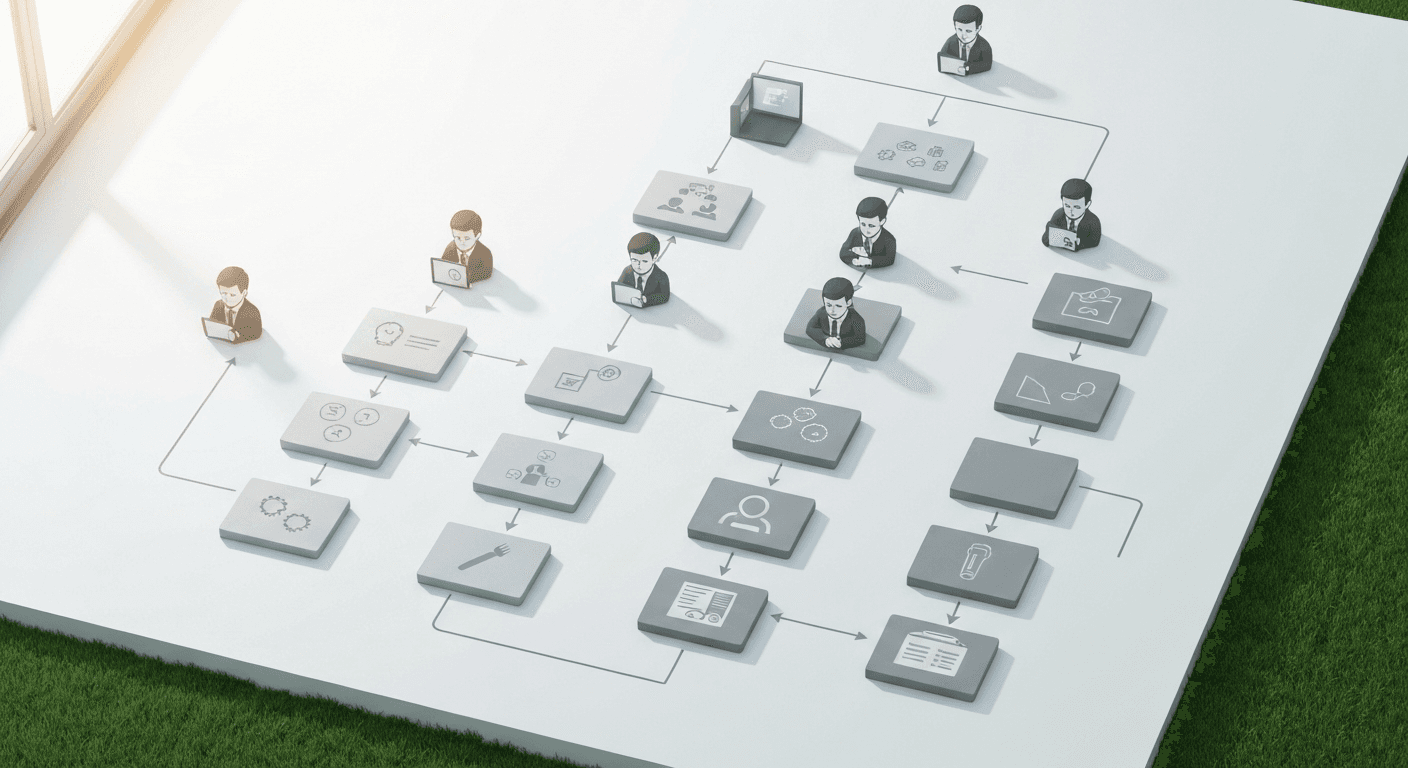
Running a debate on the Crucible platform is easy and takes just three steps. We made sure the user experience is simple, so you can go from asking your question to getting your insight without any trouble. The platform takes care of the tough parts for you, letting many LLMs talk to each other in a way that is fair for all sides. This helps bring out the most from your ai.
This simple guide helps you pick your tier, ask your question the right way, and start the debate. Just follow these steps, and you can launch your first multi-agent ai debate with LLMs. Get ready to try a new way of making good choices.
Step 1: Choose Your Tier
Your first step is to pick a product. Go to the Crucible website and pick the tier that fits what you need. This step shows you what the setup and cost will be in your debate with the ai systems.
If you are an executive who wants something quick and simple, pick the Web Platform. You can sign up and start your first debate in just a few minutes. There is no need to do a long setup. If you are a developer, pick the Community Edition. You can get started with the BYOK model right away. If your team wants to work together, sign up for the private beta waitlist for the Microsoft Teams App.
Each of these options will help you get into a debate with ai fast. After you pick your path and do any setup, you will be ready to make your question for the ai systems.
Step 2: Frame Your Question
The first thing you need to do for a multi-agent AI debate is write a strong question. The ai agents will use the question you ask to guide all of their discussion and reasoning in the debate process. When you pick the right question, you help make the chat clear and useful.
To get good results, you should follow best practices for setting up your prompts. Be sure to be clear, tell the ai agents what they need to know about the topic, and say what you want them to do. This is your chance to lead the virtual boardroom, so take the time to get it right.
Good prompts for ai agents will have these things:
-
The Core Decision: Say what main choice or problem you want the debate process to look at.
-
Key Context: Give the main facts, limits, and goals. For example, you might tell them about budget, when it needs to happen, or the target market.
-
Desired Outcome: Share what a good ending for the chat would be, or tell them what you want the reasoning to look at, like "Find the top three risks."
Step 3: Auto-Assembly of Experts
After you send in your question, Crucible’s orchestration engine gets started. The ai system brings together a group of ai agents made just for your question. This setup makes sure the right experts join your boardroom and help with your problem.
The platform picks ai agents from its list. Each agent has a different way of thinking and comes from language models and large language models, so you get lots of ideas in the group. If you have a money question, the system will pick ai agents like CFOs or investment experts. For a new product idea, marketing and engineering experts will stand out.
This orchestration step does all the work. You do not have to pick the team yourself. You quickly get a panel, and they begin to talk about your question right away. You do not need to do anything else.
Best Practices for Effective Multi-Agent AI Debates
To get good ideas from your multi-agent AI debates, you need to follow some best practices. The results you get will not just depend on the tech. It is also about how you set up the question and how you read the answers. Good orchestration is key if you want fairness and transparency in the whole thing.
These tips are here to help you get the most from every debate. In the next parts, you will see how to write good prompts, learn about the system's orchestration, and check the final replies for quality and clear next steps.
Crafting Prompts That Drive Critical Analysis
The prompts you write are the most important thing that shape how an ai agent looks at a problem. If you use a vague or leading question, you will get answers that are too general, even with advanced language models. You want to make a prompt that makes the ai agents think hard and talk through their ideas in multiple rounds of debate.
Do not just ask a basic "yes or no" question. Instead, ask for a full review. Tell the agents to "debate the pros and cons" or "look for weak points in the ideas" of a plan. This will push the agents to have a better and deeper talk.
To get your prompts ready for strong critical analysis using ai agents and language models:
-
Incorporate Constraints: Bring up budget limits, timelines, or resource shortages. This makes the rounds of debate fit real life.
-
Request Specific Roles: Tell the agents to think like a "skeptic" or "customer advocate." This helps them use more lines of reasoning.
-
Define Success and Failure: Be clear about what a good or bad result will look like.
When you use these tactics, you help the AI focus on the details, think with reason, and have a real and meaningful discussion.
Strategies for Orchestration and Conflict Resolution
Good planning is important to run a debate process well. The Crucible system uses something called a hierarchical model for its main way of doing orchestration. In this setup, a main agent leads the debate and gives out turns to speak. The main agent also makes sure that all points of view in the group get heard. Because of this, no single agent gets to take over the talk, and the debate keeps its order.
It is not bad when there is conflict in the system. In fact, the system says that conflict can be good. The way conflict is handled here is not to get rid of it, but to make sense out of it. If agents share data or ideas that do not agree, the orchestrator will ask them to give reasons for what they say. The agents also challenge each other right there in the debate. This kind of peer review is key for finding out what is true.
With this way of doing things, the debate stays open for all to see. You can look at the whole debate transcript after it is done. You can find out how people came to an agreement or why some did not. This lets you get the full story of how choices get made—not just the answer at the end.
Assessing Quality, Transparency, and Actionable Insights
After the debate is over, you need to check the output for good quality, fairness, and useful takeaways. A good report should be more than just a rundown of what was said. It should give you a clear plan that helps you make a strong choice. To keep things fair for all sides, each agent gets to talk in order, and all points get looked at before a final answer is chosen.
The first thing you should do is check how open the report is. Does it show the thought behind the ending choice? The report should help you follow the big points and show how the peer review process changed the result. You want to be sure you can see where the outcome came from. This level of openness is very important for a strong review.
When you check the results, you should watch for:
-
Actionable Insights: Does the report tell you what steps to take, or does it just talk about ideas?
-
Risk Identification: Does it list out any risks and give you the ways to handle them?
-
Unresolved Questions: A good talk can show what is not yet clear, so you know what to look into next.
By using peer review, reasoning, and making sure there is fairness and transparency, you can trust the process and get better results.
Conclusion
To sum up, starting your first multi-agent AI debate can change how you make important choices. When you use Crucible Decision Intelligence, you go past old ways of doing things. Instead of just going with your gut, you get strong and clear ideas from a team of virtual experts. This helps you make better choices and can also lower the risks that come with big decisions. You can pick between the premium web platform or the community edition. Each one is made to fit what you need. With the right setup, you can get useful answers in only five minutes. If you want to get started, you can book a free meeting to see how Crucible can help change the way you make decisions.
Frequently Asked Questions
How do multi-agent AI debates drive better decisions than traditional methods?
Multi-agent AI debates help people make better choices. They do this by checking ideas and clearing out bias that can be found in usual ways of thinking. Unlike when just one person or one large language model is used, a debate with ai lets every side of a problem get seen. This means the answers we get are stronger and checked from all sides.
What industries benefit most from Crucible’s decision intelligence approach?
Industries that make big decisions about money or long-term plans get the most out of ai systems. This is true for finance, technology, venture capital, and companies where boardroom choices cause big money or business changes. Crucible’s ai helps reduce risk in these places.
How does Crucible ensure fairness and reliability among AI agents?
Crucible uses a clear orchestration model to keep things fair. This model helps with turn-taking and asks people to do peer review. For reliability, ai agents check each other’s work using adversarial synthesis. This helps make sure the answers are right and gives transparency into how the ai’s reasoning works.